
C5 · Explainer
Ads for “How your county decided what your home is worth”
3 concepts that lead to this page. Each one comes in 4:5, 1:1, 9:16, with its own primary texts, headlines and description. Click an image to see it full size.
Concept A
The article
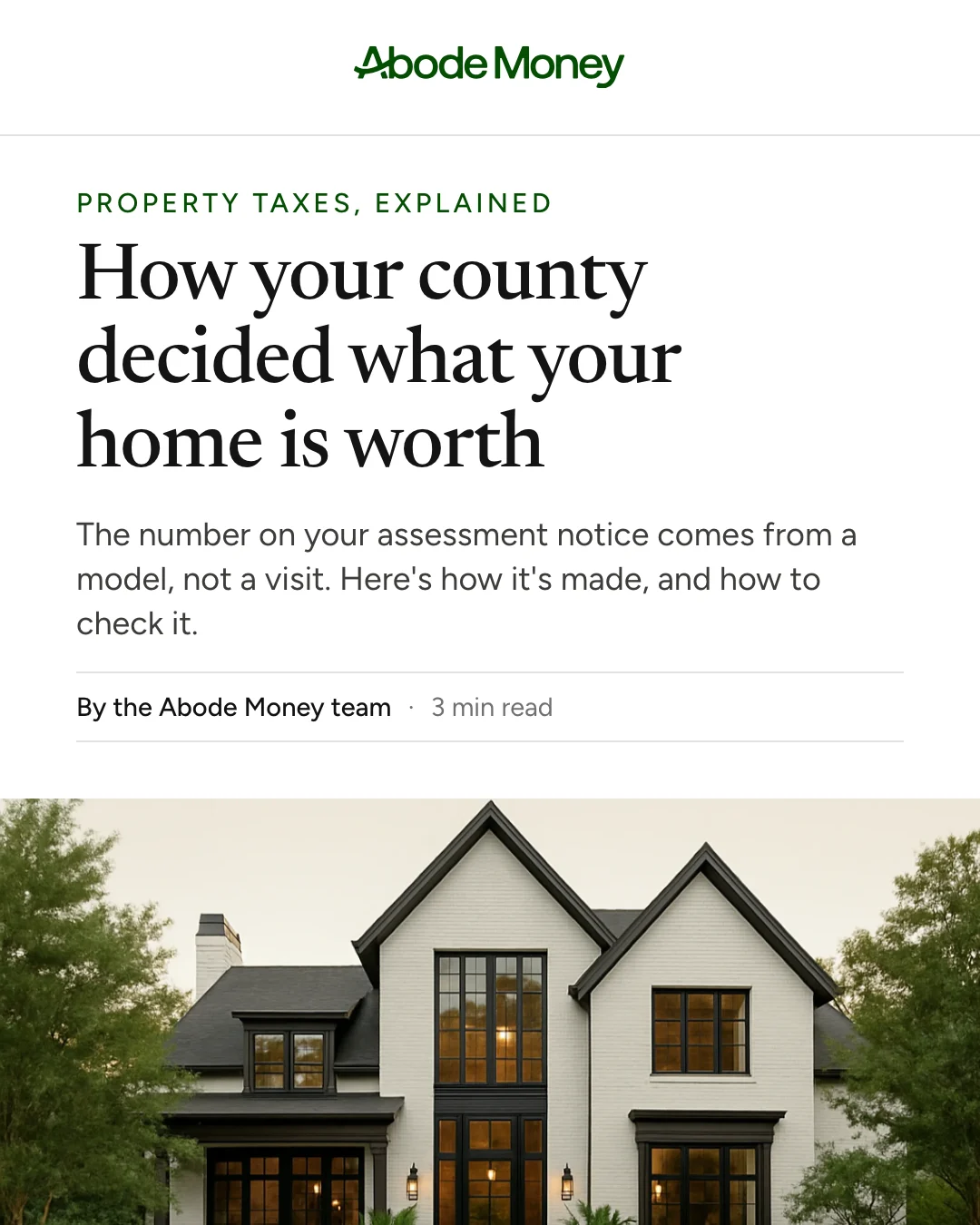
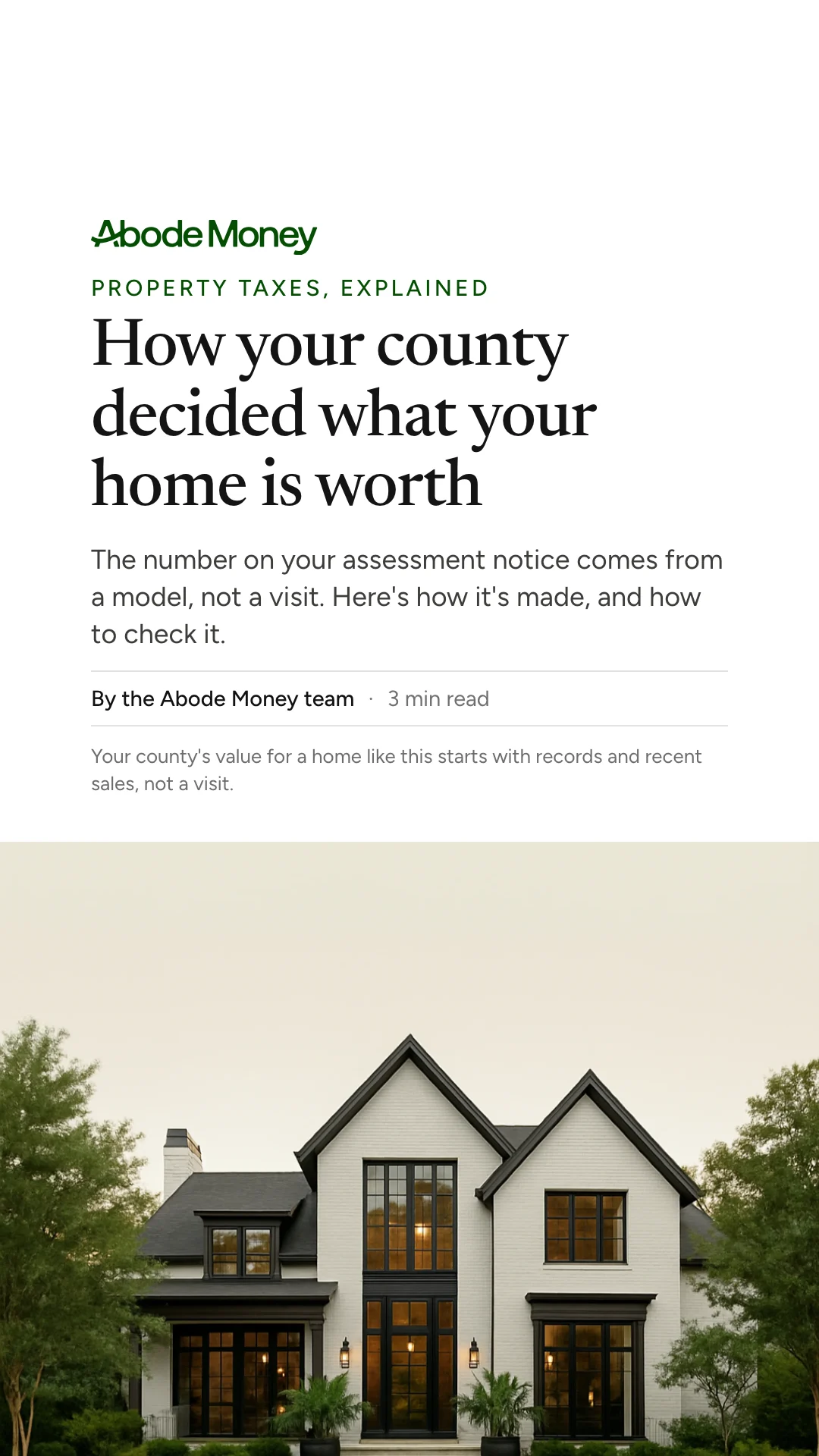
The lander's first screen: kicker, headline, standfirst, byline and lead photo. Reads as a link to an explainer.
multiple-static-appraisal-homeowner-estimate-in_house-article_c5_10_2026

Primary texts
- Primary text 1
How did your county decide what your home is worth?
The number on your assessment notice comes from a model, not a visit. Here's how it's made, and how to check it.
A 3-minute read from the Abode Money team.
- Primary text 2
Your county's value for a home like this starts with records and recent sales, not a visit.
That value drives your tax bill, and homeowners have the right to question it.
Our 3-minute read: How your county decided what your home is worth, and how to check it.
- Primary text 3
Assessors can't inspect every home, so they value whole neighborhoods at once.
They use recent sales, property records and statistical models, a method the industry calls mass appraisal.
How your county decided what your home is worth, in a 3-minute read.
- Primary text 4
The tax board will never send you a check. They assess the value of your home and move on.
Homeowners can challenge an assessment, within a deadline their state or county sets. The first step is knowing whether your number looks high next to similar homes.
Start with the 3-minute read: How your county decided what your home is worth.
- Primary text 5
Lower your property tax bill.
Savings Guarantee™: if you don't save in year one, year two is free. If you still haven't saved after two years, you get a refund. Terms apply.
Before any of that, the 3-minute read: How your county decided what your home is worth.
Headlines
- 📰 How your county valued your home34
- 🔎 Is your home's tax value right?33
- 🏘️ A model, not a visit23
- 🧮 Here's how it's made22
- 📖 A 3-minute read on your tax value35
Description
- Get your free savings estimate.31
Concept B
The property record
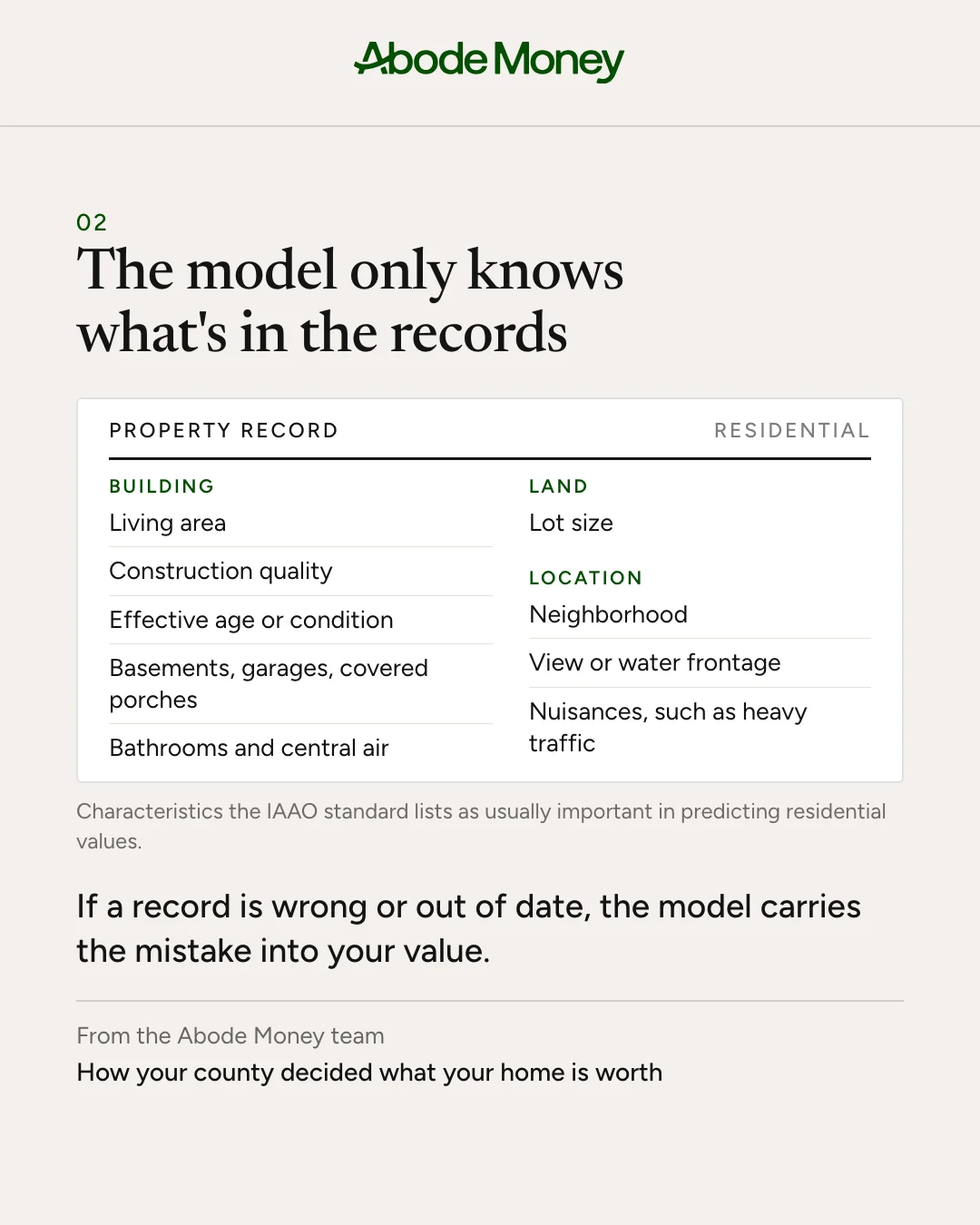
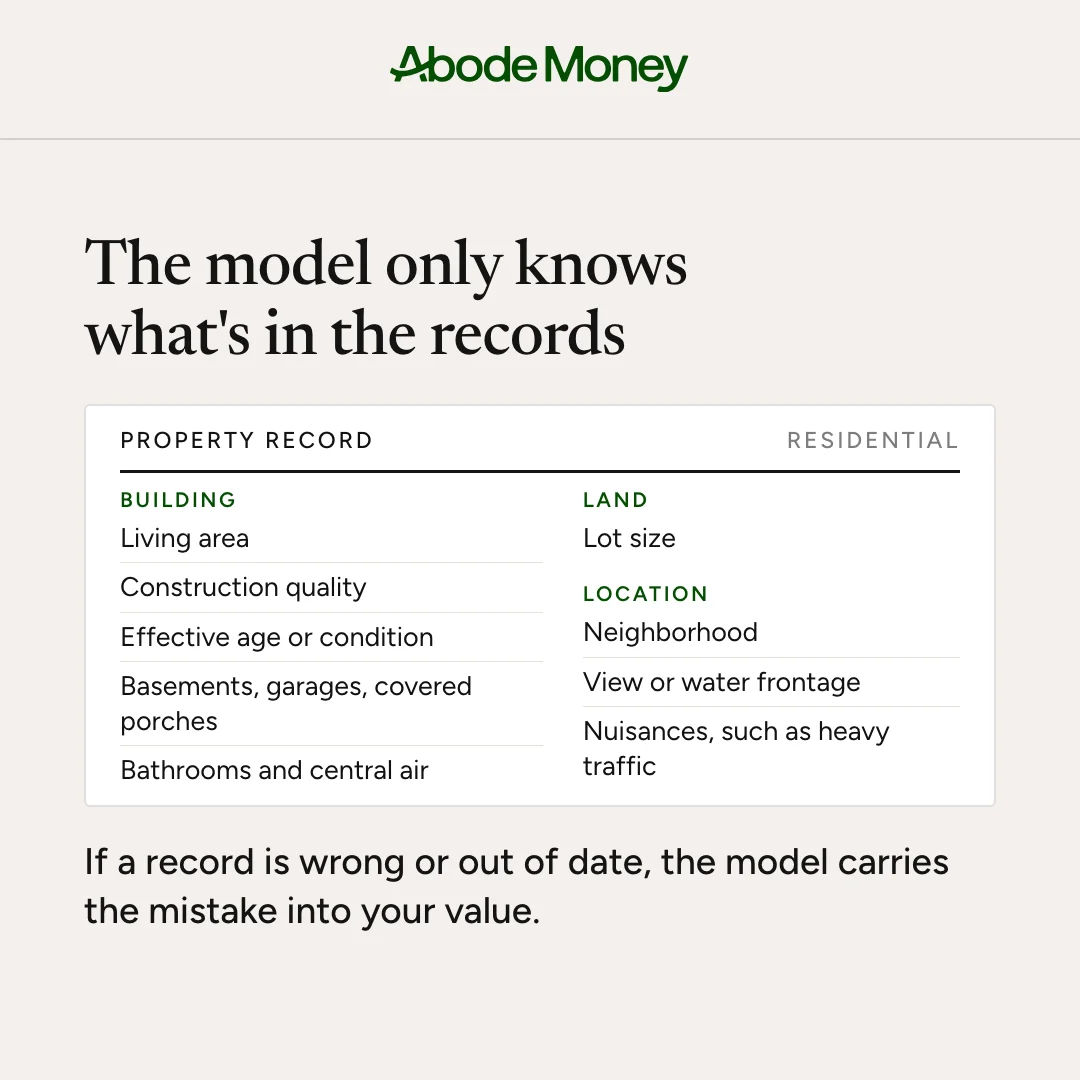
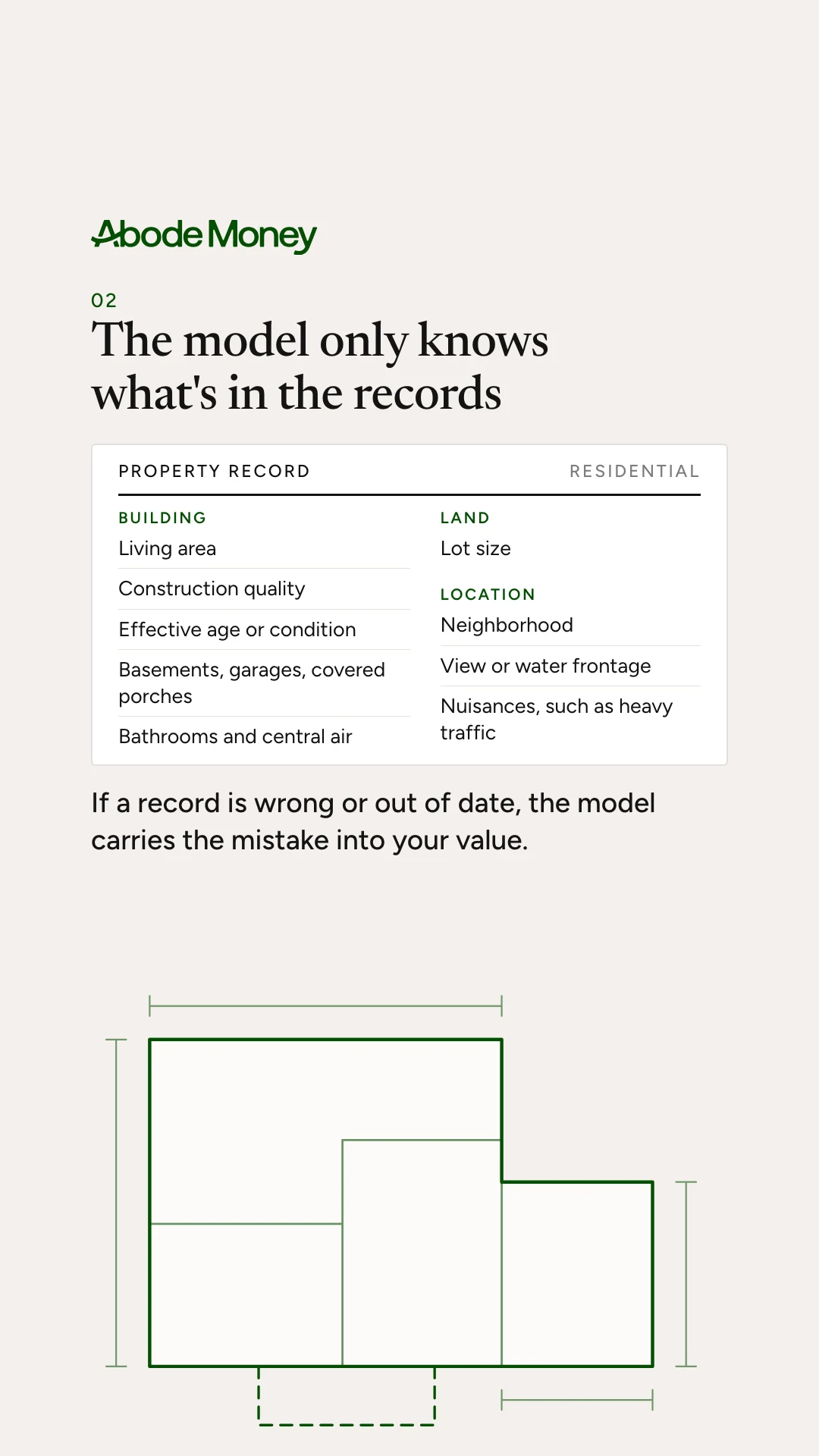
Section 02 as a document: the property-record card of what the model knows, and how a wrong record carries into your value.
multiple-static-appraisal-homeowner-estimate-in_house-property_record_c5_10_2026
Primary texts
- Primary text 1
A model can't see your kitchen.
It works from the facts on file for your home: living area, construction quality, bathrooms, lot size, neighborhood. If a record is wrong or out of date, the model carries the mistake into your value.
Read how your county decided what your home is worth. It takes 3 minutes.
- Primary text 2
Your county valued your home, often with a formula, not a visit.
The mass appraisal standard published by the International Association of Assessing Officers (IAAO) lists characteristics that are usually important in predicting a home's value, including living area, lot size and neighborhood.
See what's on the record in our 3-minute read: How your county decided what your home is worth.
- Primary text 3
The IAAO standard says property characteristics should be verified at least every 4 to 6 years.
A change made since your home's facts were last checked, such as an addition, may not be on file yet. If a record is wrong or out of date, the model carries the mistake into your value.
The 3-minute read: How your county decided what your home is worth.
- Primary text 4
What to check on your record: square footage, bedrooms, bathrooms, condition and upgrades, against your own home.
The number on your assessment notice comes from a model, not a visit, and the model only knows what's in the records.
How your county decided what your home is worth, in a 3-minute read.
- Primary text 5
You can ask how the number was reached.
Under the IAAO standard, assessment staff should at least be able to produce a property record and explain the approach used. A property owner should never be told simply that “the computer” or “the system” produced the appraisal.
More in our 3-minute read: How your county decided what your home is worth.
Headlines
- 🗂️ What's on your property record?34
- 🏠 A model can't see your kitchen32
- 🔎 Is your home's tax value right?33
- 📋 The model only knows the records34
- 🧾 Check the facts on file25
Description
- Get your free savings estimate.31
Concept C
The neighbors' sales
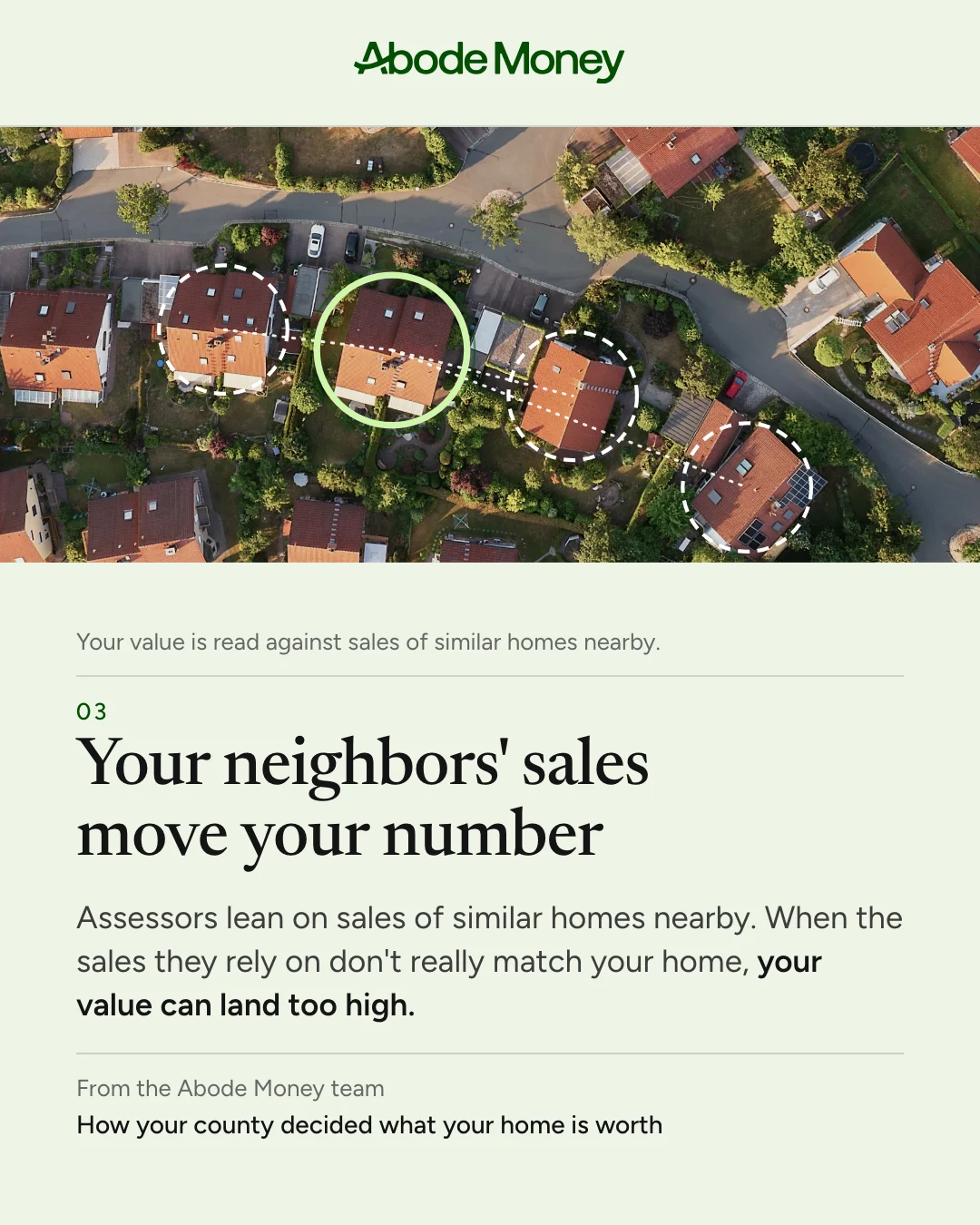
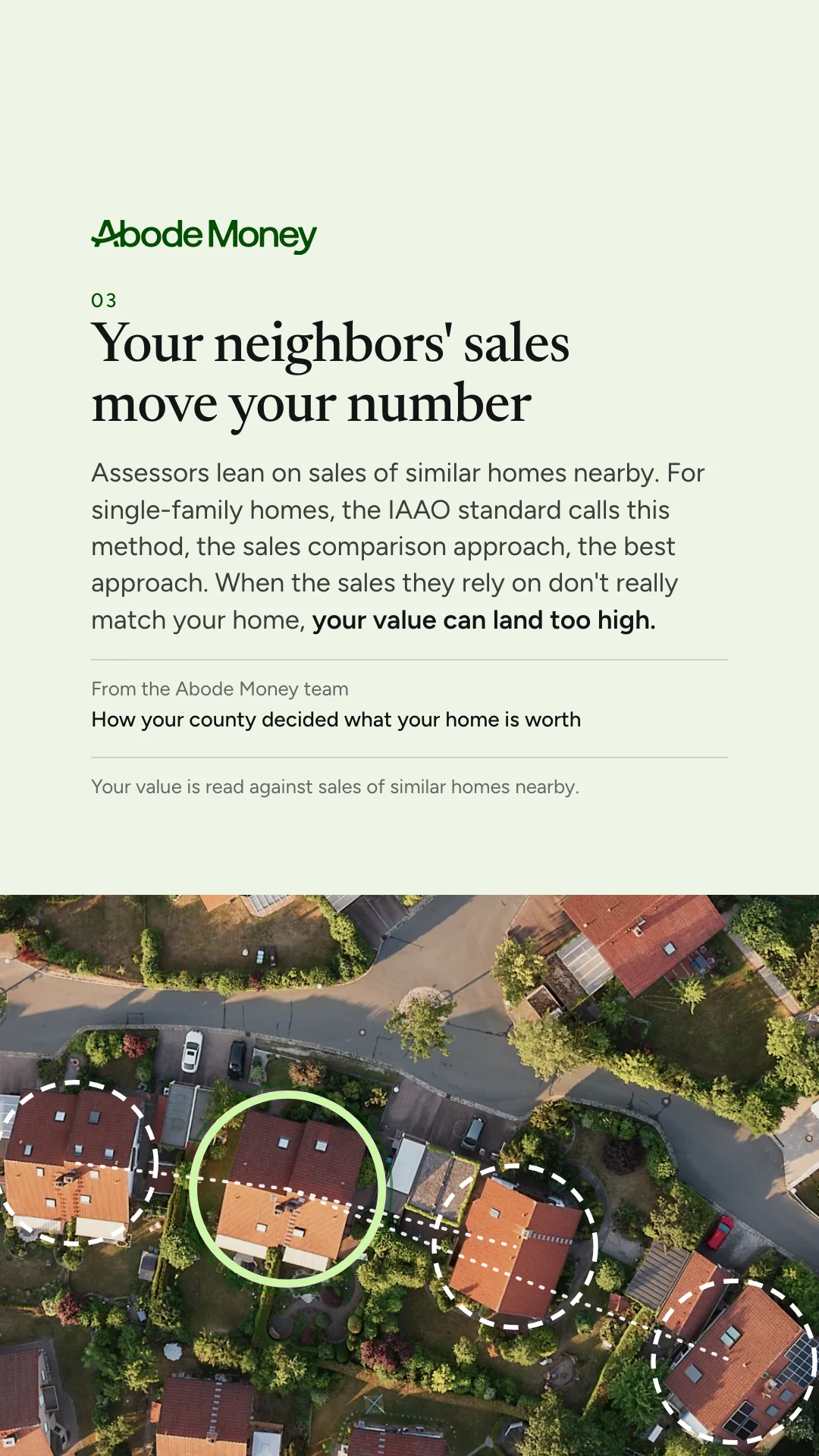
Section 03 as an annotated photo: your home read against sales of similar homes nearby, and why the value can land too high.
multiple-static-appraisal-homeowner-estimate-in_house-neighbor_sales_c5_10_2026

Primary texts
- Primary text 1
Your neighbors' sales move your number.
Assessors lean on sales of similar homes nearby. When the sales they rely on don't really match your home, your value can land too high.
How your county decided what your home is worth, in a 3-minute read.
- Primary text 2
Your value is read against sales of similar homes nearby.
For single-family homes, the IAAO standard calls this method, the sales comparison approach, the best approach. The first step is knowing whether your number looks high next to similar homes.
Our 3-minute read: How your county decided what your home is worth.
- Primary text 3
The tax board will never send you a check. They assess the value of your home and move on.
When the sales they rely on don't really match your home, your value can land too high.
See how it works in a 3-minute read: How your county decided what your home is worth.
- Primary text 4
What makes a sale comparable? California's Board of Equalization gives homeowners three tests:
Was it an arm's-length, open-market sale? Is the home physically similar? Did it sell close enough to the valuation date?
The rest is in our 3-minute read: How your county decided what your home is worth.
- Primary text 5
Type your address and see your free savings estimate.
It compares your assessment with similar homes nearby. It doesn't change anything with your county.
First, read how your county decided what your home is worth. It's a 3-minute read.
Headlines
- 🏘️ Neighbors' sales move your number36
- 📍 Read against similar homes nearby35
- ⚖️ What makes a sale comparable31
- 🔎 Is your home's tax value right?33
- 🏡 Does that sale match your home?33
Description
- Get your free savings estimate.31